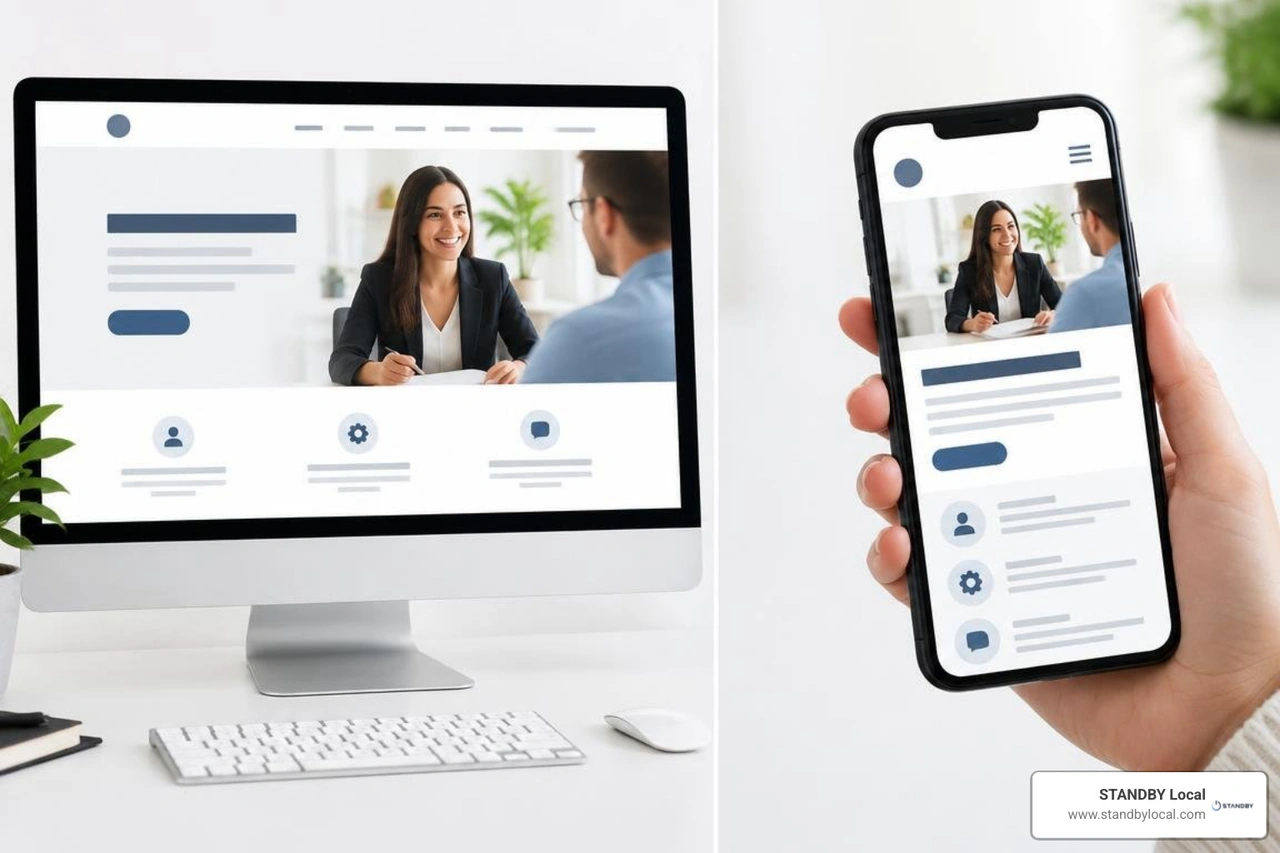
What Do the Best Professional Services Websites Make Easy?
The best professional services websites make it easy for visitors to understand what the business does, see why it can be trusted, and call or book without hunting for a contact button. Sites such as Bain & Company, Romano Law, and Edelman Financial Engines are useful examples to review with those questions in mind.
For a local service business, the lesson isn't to copy a large firm's design. It's to find the bottleneck: Can people understand your services, use the site on a phone, and reach you without friction?
I'm Drew Edmondson, founder of Charlottesville-based STANDBY Local, where I help service businesses improve their websites and follow-up systems. Before writing anything new, I check what a business already has published, including existing blog posts and guide pages, so I'm not covering ground we've already addressed elsewhere on the site. When I review the best professional services websites, I look first at what might stop a visitor from making an inquiry.
That same diagnostic step applies here: this article focuses specifically on inquiry friction, a topic distinct from our other guides, so it fills a gap rather than repeating one.
A useful starting point is to treat the website as one part of a broader small business website cost guide conversation. When owners understand the likely investment range and the maintenance required, they can make a calmer decision about whether a full rebuild or a few targeted fixes will remove the inquiry bottleneck.
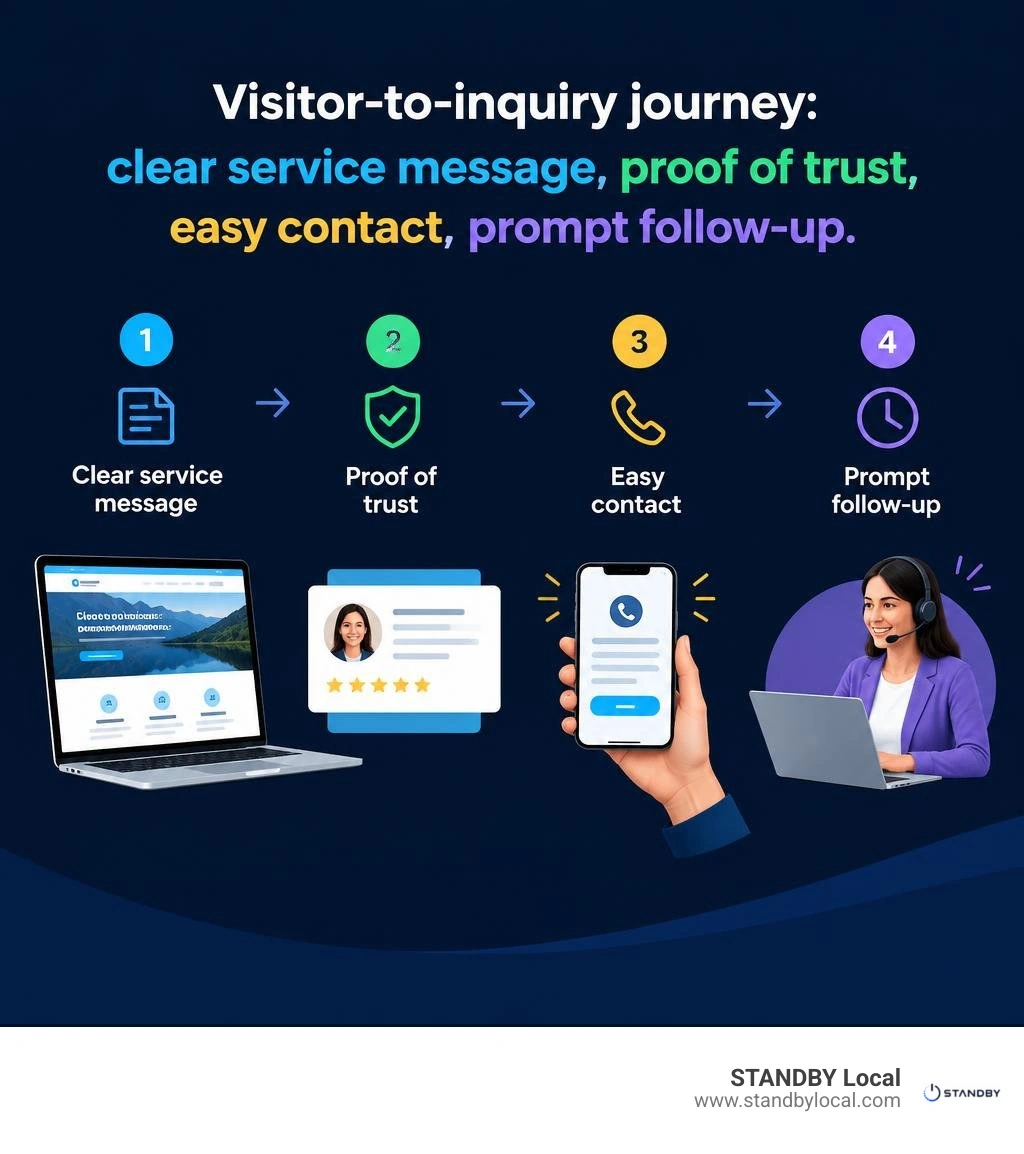
What Can the Best Professional Services Websites Do to Encourage Inquiries?
When someone lands on your site, they are usually looking to solve a specific problem. If they encounter visual clutter, confusing navigation, or slow loading speeds, they bounce back to the search results.
A high-performing site relies on responsive website design to ensure every page functions smoothly across phones, tablets, and desktop computers. When layout and messaging work together, visitors face fewer hurdles between discovering your business and requesting assistance.
| Feature Supporting Inquiries | Friction Point That Stops Inquiries |
|---|---|
| Clear headline stating service and service area | Vague slogans with no mention of what you do |
| Direct click-to-call phone number and booking link | Hidden contact form buried inside a sub-menu |
| Fast mobile page load with lightweight images | Slow scripts, large uncompressed files, and popups |
| Clear social proof and verified credentials | Zero client feedback or outdated references |
| Streamlined 3-field contact or booking form | Long forms requiring non-essential personal details |
Clear Positioning and Above-the-Fold Messaging
Your above-the-fold area—the section of your page visible before scrolling—must answer three basic questions immediately: what service you provide, who you serve, and how to get started.
Reviewing what a small business homepage should include helps clarify these essential priorities. When your visual hierarchy highlights your core service scope right away, potential clients do not have to guess whether they are in the right place.
How Can You Make Booking and Contact Paths Easier?
Reducing friction during contact is one of the most effective ways to capture prospective clients. When visitors must fill out ten form fields just to ask a question, many simply abandon the page.
- Embed direct scheduling tools: Allow clients to select a time directly on your calendar rather than playing email tag.
- Keep contact forms short: Limit inputs to name, phone number, and a brief message.
- Use sticky click-to-call buttons on mobile: Let mobile users dial your office with a single tap.
- Offer automated response options: Pair web forms with workflow automation or an AI receptionist so every inquiry gets an immediate answer.
For service businesses in Charlottesville and Central Virginia, an AI receptionist can be especially useful after hours. Instead of sending a missed call to voicemail, the system can answer, qualify the caller, and move the lead into your follow-up process while you stay focused on the work in front of you.
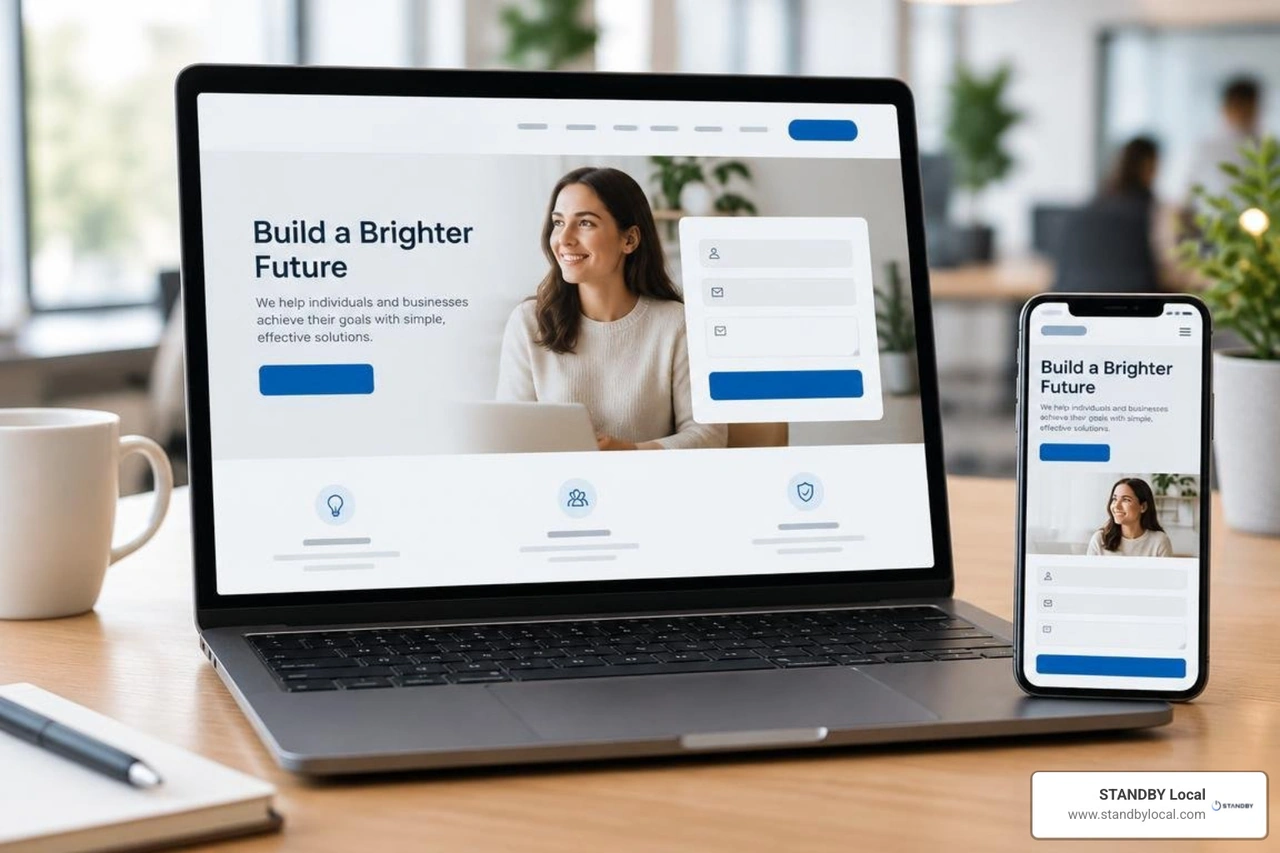
Which Core Features Can Help a Service Website Encourage Inquiries?
Building a dependable local web presence requires clear trust cues. Prospective clients evaluate whether you are legitimate, licensed, and established in the community before handing over their project details.
How Do Social Proof and Authority Signals Build Trust?
Trust signals provide objective evidence of your expertise. Featuring genuine client reviews, verifiable professional certifications, and memberships in regional organizations helps reassure visitors. Resources from the U.S. Small Business Administration highlight that establishing clear credentials and verified business identity is fundamental to winning customer confidence online.
For service firms operating across Albemarle County, VA, showing local ties, clear physical service areas, and accurate municipal compliance signals confirms that you are an established, accountable business. Adding accreditation badges alongside brief summaries of real project outcomes strengthens your reputation further.
How Do Technical Performance and Mobile Responsiveness Affect Service Sites?
A clean visual layout cannot convert visitors if the underlying technical foundation is sluggish. According to technical guidelines from Google Search Central, search engines evaluate sites primarily on their mobile performance and Core Web Vitals. Federal Trade Commission guidance for online businesses also emphasizes clear, accurate disclosures and straightforward navigation that help consumers make informed decisions.
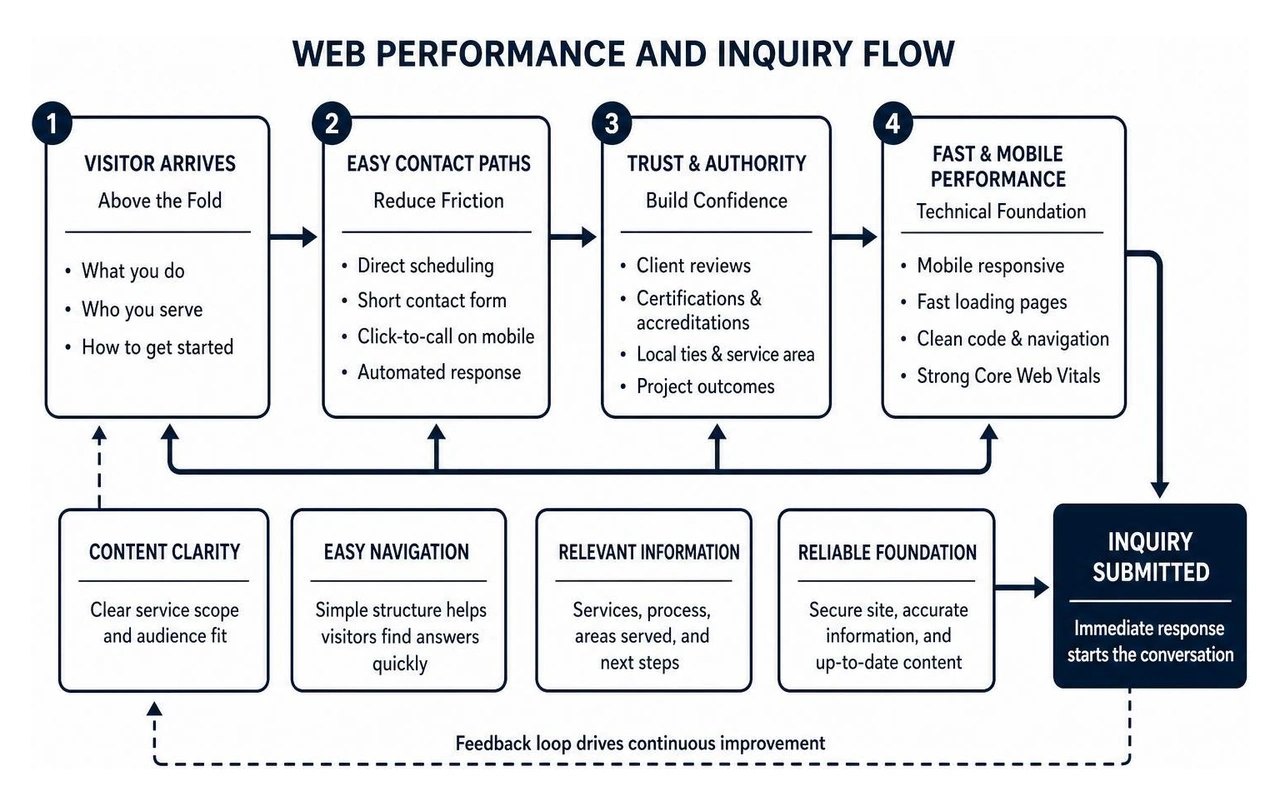
Ensuring fast hosting, streamlined navigation, and clean code keeps pages loading quickly. When pages load without delay, mobile users can review services and submit inquiries without frustration.
A practical way to evaluate this is to open your own site on a phone and time how long it takes to find your phone number, confirm your service area, and start a booking. If any of those steps feels slow or unclear, that is a bottleneck worth fixing before you spend more on ads or directory listings.
How Should You Budget and Plan for a Professional Service Website Overhaul?
Planning a site upgrade requires evaluating whether a standardized template or a custom build matches your current operational goals. While template solutions offer faster setup times, custom builds provide tailored integrations with your scheduling, CRM, and local search infrastructure.
Reviewing typical investment ranges and ongoing maintenance considerations ensures you maintain a dependable conversion pipeline over time. Keeping plugins, security certificates, and service details updated protects your site performance and conversion paths.
A practical planning approach starts with a short diagnostic conversation. During an initial consultation, we can review your current site, identify the most likely inquiry bottlenecks, and outline a realistic scope before you commit to any redesign work.
For some businesses, the right next step is a full rebuild. For others, a handful of targeted fixes to the homepage, contact flow, or page speed will solve most of the problem without a full redesign. Part of a diagnostic review is figuring out which category your site falls into before spending money on work you may not need.
When we work through this with a local service business, we also look at how the website connects to the rest of the operation. A fast site with a clear booking path still underperforms if the owner cannot answer follow-up calls quickly. That is why the planning conversation often includes the phone workflow, the contact form routing, and the follow-up sequence rather than treating the website as a standalone project.
What Should You Do Before Choosing Website Changes?
Before redesigning pages or rewriting copy, take time to diagnose where your current customer acquisition process stalls. A drop in inquiries is not always a design flaw—it could be a mobile layout issue, a confusing booking process, or slow follow-up on incoming leads.
Pinpointing these specific bottlenecks first ensures that any updates made to your website or intake workflow deliver measurable, practical improvements for your business.
This same diagnostic habit applies to your broader marketing presence, not just the website itself. Checking what is already working, what overlaps with past efforts, and what is genuinely missing keeps you from paying twice for the same fix or overlooking the one change that would actually move the needle.
For example, a Charlottesville contractor might discover that the website is generating calls, but several are going unanswered during busy job-site hours. In that case, the priority is not another homepage rewrite. The priority is a missed-call answering system that keeps the lead engaged until someone can respond. Starting with the bottleneck changes the order of work and usually reduces the total cost.
Frequently Asked Questions About Professional Services Web Design
How quickly do website visitors decide whether to stay or leave?
First impressions form within a few seconds of landing on a page. Visitors assess the headline, visual cleanliness, and page speed immediately. If they cannot quickly confirm what you offer and where you operate, they often navigate back to search results.
How often should a professional services firm redesign its website?
Most service businesses benefit from evaluating their site design every two to three years. While visual styles evolve, the primary reasons to update include changing mobile device standards, slow loading speeds, or shifts in your core service offerings.
Why are embedded scheduling tools better than standard contact forms?
Embedded scheduling tools eliminate back-and-forth messaging by allowing qualified leads to select open appointment slots instantly. This removes friction from the booking process and ensures inquiries move directly into your operational calendar.
Book a Free 15-Minute Consultation
If you operate a service business in Charlottesville, Albemarle County, or Central Virginia, we can help identify what is holding your website and lead follow-up back.
We take a diagnostic approach to find operational bottlenecks and build reliable web and automation systems. Book a free 15-minute consultation to discuss your business goals.