
How to Compare Service Business Website Designers
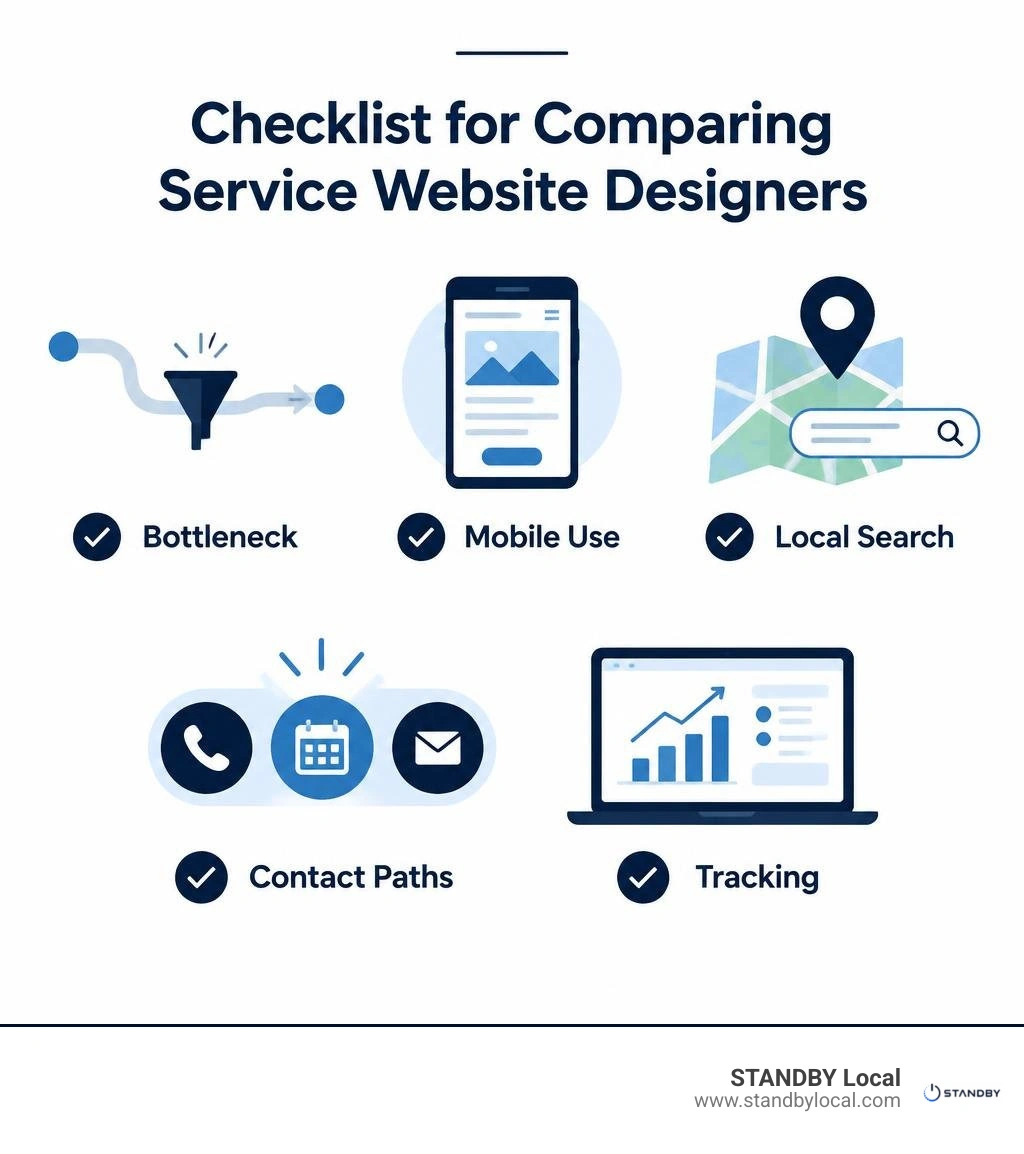
Start with the bottleneck, not the design mockup. Good service business website design helps local customers find the right service, trust the business, and call or book without friction. Compare designers on how they will address your actual problem: low search visibility, visitors who do not inquire, or leads that go unanswered.
Ask each designer to show how their plan handles mobile speed, clear service pages, local search basics, prominent contact options, and lead tracking. A polished homepage matters, but it should support the calls and inquiries your business needs.
If you are not sure where leads are getting stuck, diagnosing your customer flow is the place to start. I’m Drew Edmondson, founder of STANDBY Local in Charlottesville, where I work on service business website design, local SEO, and lead follow-up. I also run a local wellness center, which keeps my focus on how real customers find and contact a business.
What Makes Service Business Website Design Different From General Sites?
Most websites are built like digital brochures or online catalogs. An e-commerce shop focuses on shopping carts and inventory filters, while a corporate enterprise site aims to impress shareholders. A local service company operates under completely different rules.
When someone looks for an emergency plumber, an automotive fabricator, or a local wellness specialist in Central Virginia, they usually have high buyer intent. They are experiencing a specific problem right now, and they want to know three things within seconds: Do you do this work? Do you serve my area? How quickly can I get in touch?
Your website exists to shorten the distance between a customer discovering you and initiating a conversation. That requires dedicated inquiry pathways, fast-loading mobile layouts, and immediate trust triggers that show credibility right away.
Core Elements of High-Converting Service Business Website Design
A high-converting service layout guides a visitor straight toward action without unnecessary distractions:
- A Focused Hero Section: Clearly state what you do and where you do it above the fold. Avoid vague slogans that force visitors to guess your trade.
- Immediate Contact Triggers: Provide a prominent click-to-call button and a short quote request form right away.
- Scannable Service Menus: Break offerings into logical categories using clear headings and icons so readers can confirm your services at a glance.
- Embedded Trust Signals: Place verified customer reviews, licensing details, and trade badges near your primary call to action.
- True Mobile Responsiveness: Design for one-thumb navigation so visitors can tap to call or submit a form without pinching or zooming.
Structuring Service Pages and Local Service Areas
A single generic service page listing bullet points rarely ranks well in search results or converts cautious buyers. Search engines match search queries to relevant, focused URLs. If someone searches for septic repair in Albemarle County or custom metalwork in King George, a dedicated page answering that exact need performs significantly better.
Proper site architecture uses dedicated child pages for each core service and distinct service-area hubs. Structuring geographical landing pages cleanly alongside structured data outlined in the Google Search Central guide on structured data ensures search engines understand your exact operational footprint.
What Capabilities Should You Compare Across Web Designers?
Not all web designers approach projects with the same technical discipline. Some focus purely on visual styling, leaving you with a beautiful site that loads slowly or fails to capture local leads. When comparing proposals, look beyond aesthetic samples and evaluate their underlying technical standards.
| Evaluation Criteria | Visual-Only Designer | Integrated Growth Partner |
|---|---|---|
| Mobile Architecture | Desktop layout scaled down | Mobile-first thumb-friendly layout |
| Local Search Setup | Basic meta description tags | Structured schema, service silos, and NAP consistency |
| Inquiry Pathways | Basic generic contact form | Click-to-call, fast quote forms, and automated lead capture |
| Speed Standards | Heavy stock assets and bloated code | Clean code optimized for Core Web Vitals |
| Lead Tracking | None or basic traffic counts | Call tracking, form tracking, and conversion attribution |
Integrating Booking and AI Automation in Service Business Website Design
Capturing a lead on your website is only half the battle. If a prospect calls while you are on a job site or working with a client, an unanswered ring often sends them directly to your competitor.
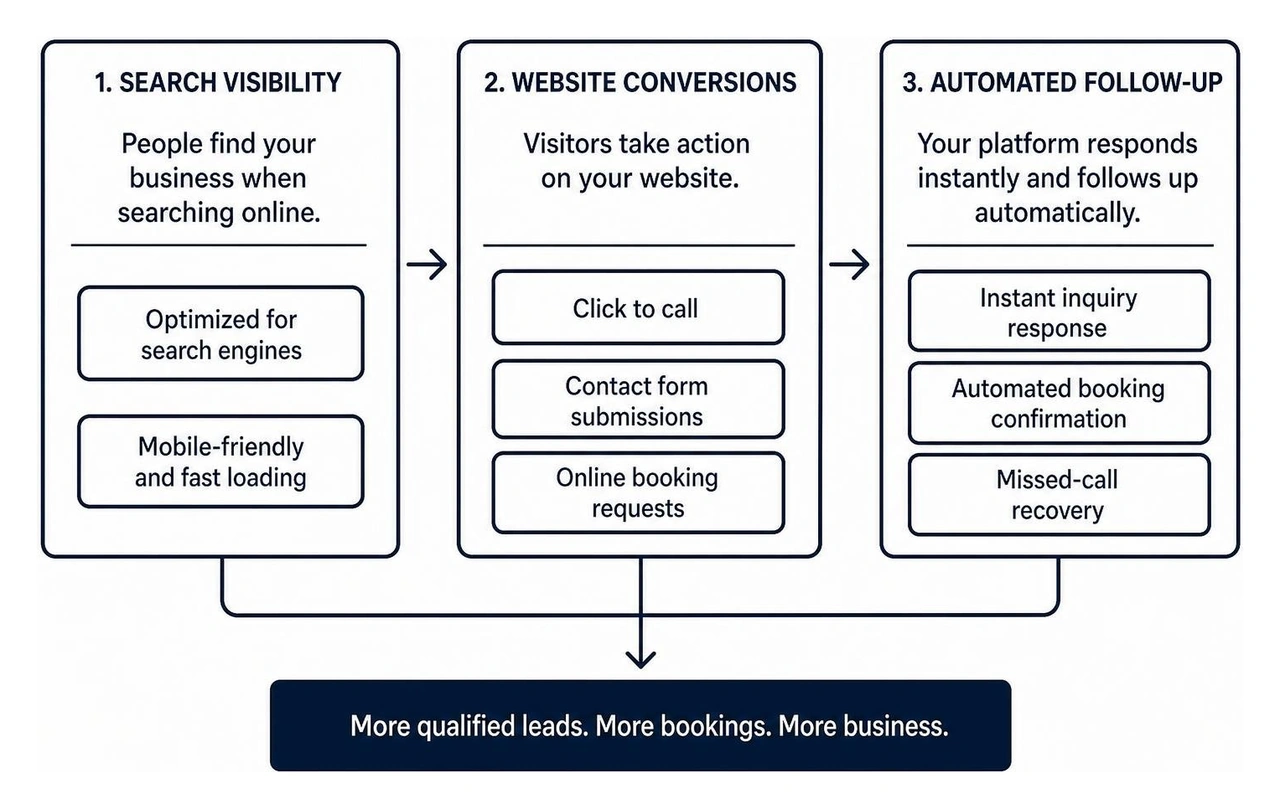
Modern service sites should integrate directly with automated booking engines, instant inquiry responses, and missed-call recovery systems. When an inquiry comes in, your platform can instantly trigger a confirmation text or offer self-scheduling. If you want to test how automated phone answering sounds in practice, you can hear our AI receptionist demo line at (434) 533-7641 or learn more about AI receptionist technology.
Evaluating Technical Speed, Mobile Experience, and Code Standards
A slow website directly hurts your conversion rate. When a site takes several seconds to load on a mobile connection, visitors hit the back button and try the next local listing.
Ensure any designer you evaluate builds lightweight pages that pass search engine technical benchmarks. Technical performance, visual stability, and responsiveness play an integral role in providing a quality page experience for users across devices.
What Are the Typical Costs, Timelines, and Warning Signs to Watch For?
Website proposals vary widely depending on technical scope and customization. As outlined in the Small Business Administration guide on business websites, planning your site architecture and functionality early prevents costly rework. Rather than shopping solely by the lowest price tag, evaluate what deliverables are actually included. A cheap template build that lacks proper search optimization or lead tracking often costs far more in lost revenue over time.
If you want a clear breakdown of what a custom build should actually include before you compare quotes, our small business website cost guide walks through typical scope line by line.
Common Red Flags That Lead to Lost Customers
When vetting prospective web design partners, watch for these operational red flags:
- Guaranteed Search Rankings: The Federal Trade Commission guidance on advertising claims cautions against deceptive performance promises, and no agency can guarantee specific organic placements.
- Buried Contact Details: If a phone number is hidden inside a sub-menu or embedded as an unclickable image, mobile users will bounce.
- Missing Technical Foundations: A site launched without search console verification, proper sitemaps, or structured schema often leads to indexation issues on Google.
- Template Bloat: Heavy themes loaded with unused scripts that drag down mobile page speeds.
If you're not sure whether your current site is giving off any of these warning signs, our post on a website not showing on Google search walks through the most common causes we see in Central Virginia.
Measuring Long-Term Website Performance and Lead Flow
A website redesign is an operational investment, not a static art project. To measure your return on investment, you need clear conversion tracking that records phone calls, form completions, and booking requests separately from general page views.
You must also balance your website build with your broader local search presence. Your website and your local map listings should work together seamlessly to capture high-intent local demand across your service area. If you're trying to figure out which piece needs attention first, our guide on whether to fix your website or Google profile first can help you prioritize.
How to Choose the Right Partner for Your Service Business
Selecting a web designer comes down to choosing someone who understands how your business actually makes money. Look for a partner who diagnoses your customer flow before pitching visual templates.
Before signing, ask who will own the domain, hosting, analytics, form submissions, and website files after launch. Confirm how updates, security, backups, and lead-routing changes will be handled once the site goes live. Ask what access your team will retain and how quickly routine edits can be completed. Clear answers help distinguish a partner who is planning for daily operations from one who is only delivering a design file. They also make it easier to compare proposals that appear similar on the surface but leave different responsibilities with the business. That clarity can prevent avoidable friction once leads begin arriving.
At STANDBY Local, we focus on building robust, conversion-focused systems for local trades and professionals across Central Virginia. You can review our published work for Ironwake Customs and Drew's wellness center, Transcending Health, on our case studies page, or explore our custom website builds to see how we approach local conversion architecture.
Frequently Asked Questions About Hiring a Service Website Designer
How long does a professional service website build usually take?
A typical custom service website build requires a collaborative process covering discovery, content structuring, design previews, and technical optimization before launch. Timelines depend heavily on the complexity of your service offerings and how quickly core business details are finalized.
Do service businesses really need separate pages for each city and service?
Yes. Dedicated pages allow you to target specific search intent without confusing prospective customers. A visitor seeking residential air duct cleaning expects different details than a commercial property manager, and search engines reward pages that provide clear, dedicated answers.
Can AI website builders replace hiring a specialized website designer?
AI tools are useful for generating quick wireframes or initial copy drafts, but they do not understand your local competitive landscape or operational bottlenecks. A specialized designer structures your site architecture, ensures technical compliance, and connects your conversion pathways directly to your lead handling workflow.
If you are ready to identify what is holding your website back, book a free consultation with us today.